
Wholesale, Lab-Grown
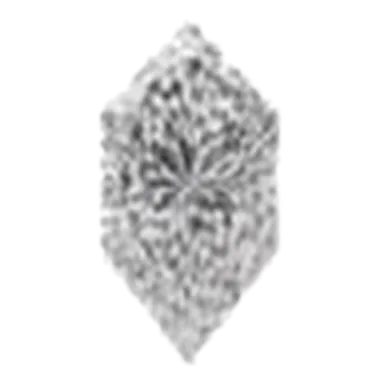
Wholesale Dutch Marquise Diamonds
Natural and lab-grown are two separate lines here, never mixed on one certificate or one price list.
Dutch marquise takes the pointed marquise outline and rebuilds the facets underneath. The belly is fuller, the facets are larger and fewer, and the result has visible contrast where a standard marquise has continuous glitter. Held next to each other the difference is obvious even to a client who cannot name it.
This is a designer shape, and it moves that way. Custom houses buy it when a marquise is the right silhouette but the standard 58 facet version looks too commercial in the piece. It also pairs well with antique-style cuts, since the chunkier faceting reads closer to old cutting than to modern brilliant work.
There is no meaningful natural supply of this cut, so our shelf is entirely lab-grown. We stock over 340 of them, which is one of the larger single-shape positions in the specialty range and enough to shop by specification rather than take whatever is left.
Buying Dutch Marquise Diamonds Wholesale
Contrast is the point of the shape, so buy for it. Look at a face-up image and check that the large facets are producing distinct light and dark zones rather than washing into a general shimmer. If a Dutch marquise looks like an ordinary marquise in the photo, it was cut too finely and you are paying for a name.
The tips still need protecting. A fuller belly does not make the points any tougher, and the same rules apply as with any marquise: check the plot for chips or naturals at either end, and set with V-prongs or a bezel that wraps the point.
Symmetry is unforgiving in this shape because the large facets make any misalignment visible. Both halves of the outline should mirror each other exactly, and the facet rows should meet the centerline at the same height on both sides. A slight lean is much easier to see here than in a finely faceted stone.
Stock here is lab-grown across the board, with IGI reports on nearly all of it. If you need two for a symmetrical design, ask about matched pairs, since matching facet pattern by hand across two singles in this cut is slow work.
Length-to-Width Ratio
Dutch marquises generally run shorter than standard marquises, commonly around 1.70 to 2.00 length to width.
The fuller belly means a ratio that would look squat in a standard marquise still looks correct here, so do not judge one against the other on numbers alone.
Frequently Asked Questions
What is a Dutch marquise diamond?
A Dutch marquise is a marquise variant with a fuller body and a chunkier, lower-count facet pattern. It shows broad flashes and strong light and dark contrast instead of the fine continuous sparkle of a standard marquise. It is a modern lab-grown cutting style used mostly in designer work.
How is it different from a regular marquise?
The outline is similar and the faceting is not. A standard marquise uses a brilliant pattern of many small facets, a Dutch marquise uses fewer and larger ones, which changes how the stone returns light. Dutch marquises also tend to carry a wider belly for the same length.
Are Dutch marquise diamonds available in natural?
No, not in any practical supply. This is a modern lab-grown cut and our entire shelf, over 340 stones, is lab-grown. A client who needs natural material with a similar look is better served by an antique-cut marquise, which is a separate search.
How do I buy Dutch marquises wholesale?
Set up a free trade account and log in to see pricing on every stone. We sell to jewelers, designers, and dealers. If you want several stones matched for one piece, call and we will pull and compare them here before anything ships.
Related Shapes
Related reading: our diamond buying and grading guides.