
Wholesale, Lab-Grown
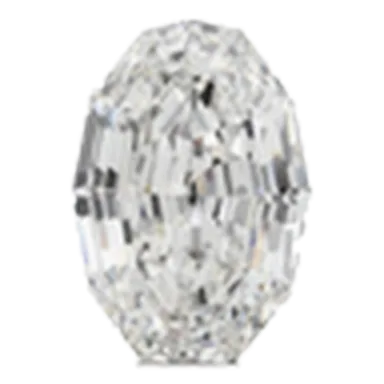
Wholesale Oval Step Cut Diamonds
Natural and lab-grown are two separate lines here, never mixed on one certificate or one price list.
Take the outline of an oval and cut it with step facets instead of brilliant ones. What you get is a stone with the finger coverage buyers like about ovals and the calm, glassy face of an emerald cut. It is one of the few genuinely new looks to come out of the last few years of cutting.
The client for this is specific and easy to spot. They looked at ovals and found them too sparkly, then looked at emerald cuts and found them too rigid. An oval step gives them the soft outline with the quiet interior, and once they see one there is usually no talking them into anything else.
Step cutting a curved outline is difficult and there is no natural supply behind it, so the entire shelf is lab-grown. We hold over 120 of them, which is enough to shop by size and ratio rather than buying whatever is available.
Buying Oval Step Diamonds Wholesale
Curved step cuts show every alignment error. The facet rows have to follow the curve evenly on both sides of the long axis, and any drift makes the stone look like it is bending. Put a face-up image on screen and compare the left half against the right. This is a faster quality read than anything on the report.
Watch for windowing through the center. A step cut with a shallow pavilion goes transparent in the middle and loses all of its presence, and on a curved outline this happens more easily than on a rectangle. If you can see through the middle of the stone in a photo taken over a background, keep looking.
Clarity rules follow the emerald cut, not the oval. Open steps show inclusions, and an oval step will not hide what an oval would have scattered. Treat VS2 as the practical floor for anything over a carat and pay attention to where the inclusion sits on the plot.
The shelf is lab-grown, nearly all IGI graded. There is no bow-tie to worry about here, which is one of the real advantages over a brilliant oval, but the outline still has to be judged by eye for even shoulders and a smooth curve.
Length-to-Width Ratio
1.40 to 1.60 length to width is the range that suits this cut best.
Shorter than 1.35 and the step rows get cramped near the ends, which is where the cutting is hardest to keep even.
Longer than 1.70 the stone looks narrow and the rows near the tips shrink to slivers, so the elongated look that works in a brilliant oval does not translate as well here.
Frequently Asked Questions
What is an oval step cut diamond?
An oval step cut is a diamond with an oval outline and step faceting, meaning long parallel facet rows rather than the small brilliant facets of a standard oval. It combines the elongated shape of an oval with the calm, mirror-like face of an emerald cut. It is a modern lab-grown cutting style.
Do oval step cuts have a bow-tie?
No, and that is one of the main reasons buyers choose them. The bow-tie shadow in a standard oval comes from brilliant pavilion faceting, which this cut does not use. What you check instead is windowing through the center and evenness of the step rows along the curve.
What clarity should I buy in an oval step cut?
VS2 or better for anything over a carat, the same standard as an emerald cut. Open step facets show inclusions plainly, so the tolerance you would allow in a brilliant oval does not carry over. Check the plot for anything sitting under the center of the table.
How do I get trade pricing on oval step cuts?
Open a free trade account and sign in, and every listing shows its price. We supply jewelers, designers, and dealers. This is a specialty shelf that moves, so call if you need a particular ratio and size that is not showing live.
Related Shapes
Related reading: our diamond buying and grading guides.