
Wholesale, Lab-Grown
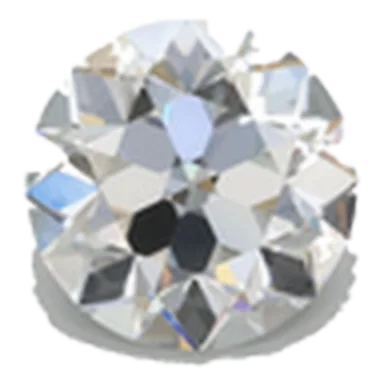
Wholesale Euro Cut Diamonds
Natural and lab-grown are two separate lines here, never mixed on one certificate or one price list.
Old European cuts were the round diamond of the late 1800s and early 1900s, and they were cut for a different kind of light. Small table, tall crown, short lower halves, and an open culet sitting in the middle like a bullseye. Under a lamp they roll big slow flashes rather than the fast fire of a modern brilliant.
Vintage restoration drives most of the demand. A jeweler replacing a lost stone in a 1920s ring cannot use a modern round without the piece looking wrong, and finding a genuine antique in the exact millimeter needed is a matter of luck and money. That has always been the bottleneck in this corner of the trade.
Lab-grown cutting solves the sourcing problem. We keep about 50 stones in this category, listed here as euro cut and covering stones described as old European cut, all of them lab-grown. It is a small shelf that turns, and it exists because the restoration work keeps asking for it.
Buying Euro Cut Diamonds Wholesale
The culet is the first thing to check and the easiest to fake in a photograph. Look down through the table in a face-up image and you should see a defined circle where the culet is open. A closed point means the stone will not read as antique in a period mounting, whatever the listing calls it.
Table size and crown height carry the look. Old cutting kept tables small and crowns tall, which is what produces the broad flashes and the visible depth. A stone cut with a modern table and a shallow crown will sparkle like a contemporary round even with an open culet, and it will look wrong next to genuine period stones.
For restoration, buy on millimeter and on look, not on grade. The stone has to match what is already in the piece, which usually means accepting a color in the I to K range and a clarity that would look modest on a modern report. Warm color is period-correct here and generally what the client wants.
Everything on this shelf is lab-grown with IGI reports on nearly every stone. If you are filling a specific size for an existing mounting, call rather than filtering, since we can measure candidates against your spec before anything ships.
Frequently Asked Questions
What is an old European cut diamond?
An old European cut is the antique predecessor of the modern round brilliant, cut with a small table, a high crown, short lower half facets, and an open culet. It produces broad, slow flashes of light rather than the fine sparkle of a modern round. It was the standard round cut from roughly the 1890s through the 1930s.
Are old European cuts available lab-grown?
Yes, and the stones on this page are lab-grown. Cutters produce old European proportions deliberately, which makes the antique look available in a specific millimeter size instead of depending on whatever estate stone happens to surface. That is exactly what restoration work needs.
How is an old European cut different from an old mine cut?
The outline. An old European cut is round, an old mine cut is cushion shaped with soft corners. Otherwise they share the same antique features: small table, tall crown, open culet, and chunky faceting made for candlelight rather than for electric bulbs.
Can I use these to replace a stone in an antique ring?
That is the most common use. Match on millimeter measurement rather than carat weight, since the mounting was built for a specific diameter, and accept a warmer color so the replacement matches the stones already in the piece. Send us the size you need and we will check what fits.
How do I see wholesale pricing?
Create a free trade account and log in. Prices are hidden from the public catalog and visible to signed-in trade buyers on every listing. This is a small shelf, so call if the size you need is not showing and we will tell you what is coming in.
Related Shapes
Related reading: Old mine cut in the lab-grown era.