
Old mine cut in the lab-grown era
A cut that stopped being made in 1910 is one of the fastest moving things on our shelf. What it is, what to check, and why it came back.
Key takeaways
- An old mine cut is the hand cut brilliant of the 1700s and 1800s: soft squarish outline, high crown, small table, deep pavilion, open culet.
- Lab growers revived it because antique supply is a fixed and shrinking pool, and because a deep, weight-hungry cut is affordable to cut when the material costs a fraction of natural.
- Check the culet first. On a report it should read medium, large or very large, not none or pointed.
- Labs file these as cushion modified brilliant or similar. That is filing, not misrepresentation, so judge the stone on the culet, the crown and the video.
- For restoration work, order by millimetre size and the culet size of the original, never by carat weight.

Twenty years ago, if a jeweler wanted an old mine cut, he went hunting through estate parcels and took whatever color and clarity came with the outline he liked. Today he can order one in the weight and quality he wants. The cut did not change. The supply did.
What is an old mine cut diamond?
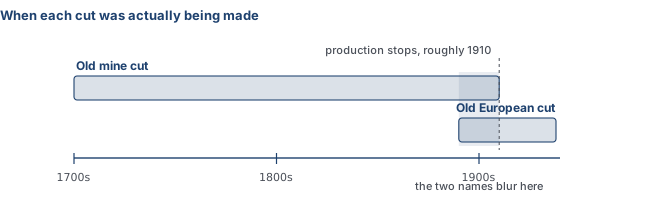
An old mine cut is the hand cut brilliant of the 1700s and 1800s: a soft squarish cushion outline, a high crown, a small table, a deep pavilion and an open culet you can see as a dot when you look straight down through the table. It was the standard round-ish diamond for roughly two centuries, and it went out of production once powered bruting and the modern round brilliant took over in the early 1900s.
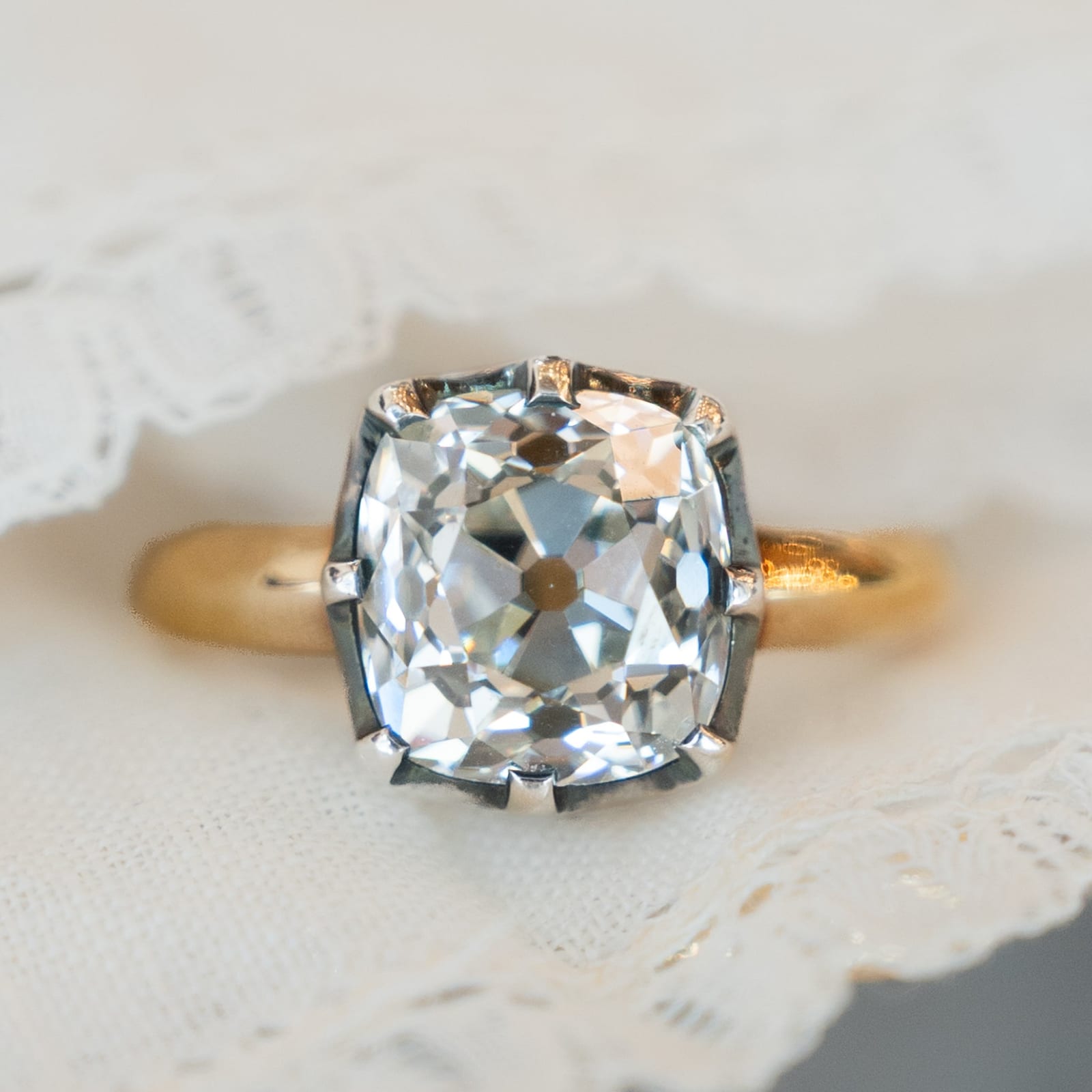
The look follows from how it was made. Cutters worked by hand and by eye to follow the rough, so no two are identical, facets are large and slightly uneven, and the stone throws broad flashes of light instead of the fine even sparkle of a modern round. Under warm light it does something a modern brilliant does not: big, slow, colored flashes. That is the candlelight effect people mean when they talk about these stones, and it is not nostalgia, it is the faceting.
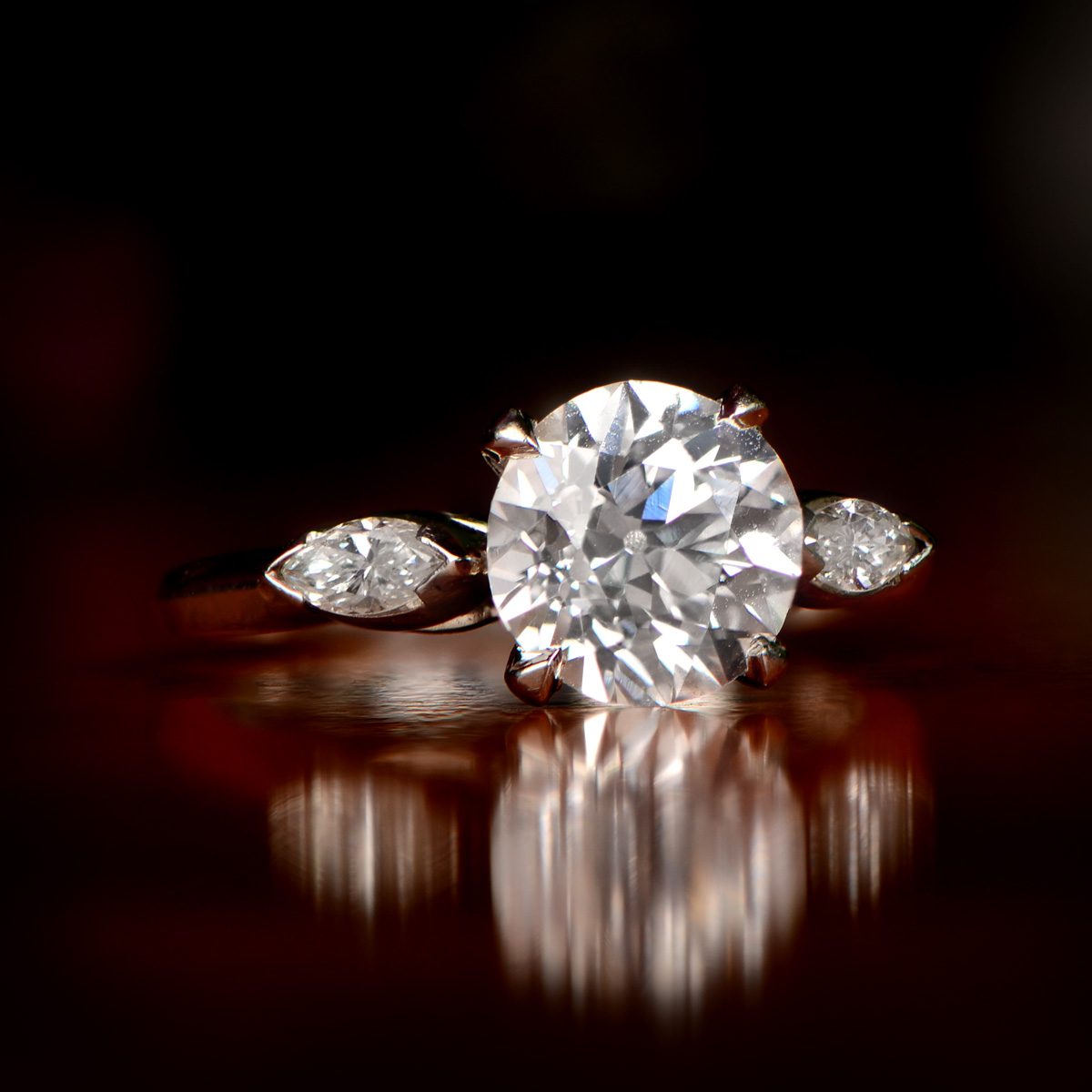
The old European cut is the next chapter of the same story: rounder outline, still a high crown and a visible culet, cut mostly from the 1890s into the 1930s. Buyers often use the two names loosely. Order on the outline, not on the name.
Why did lab growers revive the old mine cut?
Because demand outran the antique supply, and a lab-grown crystal can be cut to any pattern a cutter wants. Genuine antique old mine cuts are a fixed pool. Every one that exists was cut before roughly 1910, and every year a share of them gets recut into modern rounds for weight. Demand from designers has been climbing for a decade. The math does not work.
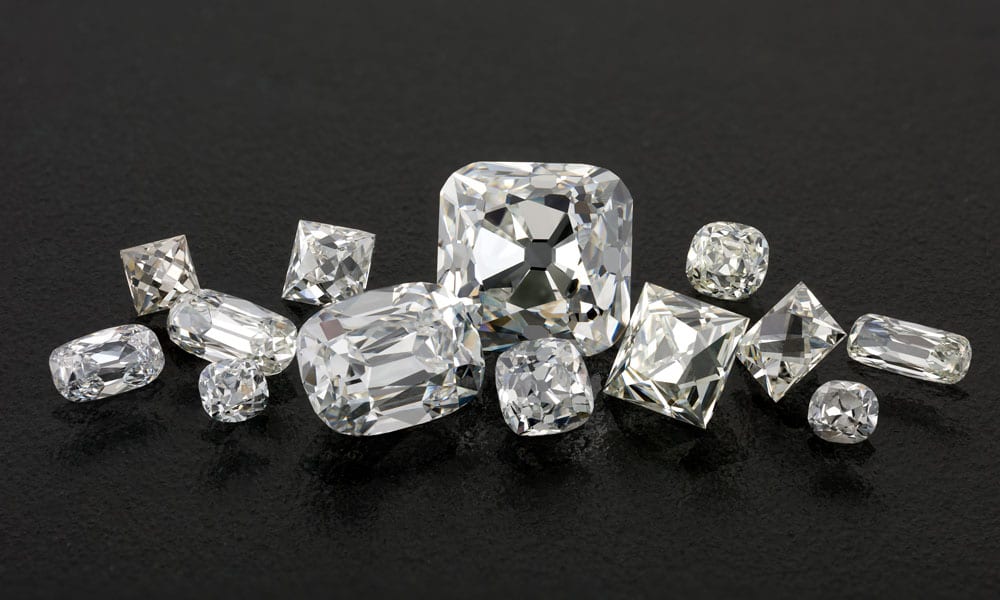
There is a second reason, and it is the one cutters actually talk about. An old mine cut is deep and holds weight, which is a problem when you are paying natural rough prices and a good one. It is much less of a problem in lab-grown, where the material cost per carat is a fraction of natural. A cutter can carry the deep pavilion, the high crown and the open culet without the weight retention argument killing the job.
You can see the result on our own shelf. We hold well over six hundred old mine cuts, and all but one of them are lab-grown. That is not a preference on our side, it is what the market produces. If you want a genuinely antique natural old miner, that is an estate hunt and it prices like one. If you want the look, in a specific weight, in a matched quality, the lab-grown shelf is where it lives.
Why the shelf is almost entirely lab-grown
Genuine antique old mine cuts are a fixed pool, and every year a share of them gets recut into modern rounds for weight. We hold well over six hundred old mine cuts, and all but one of them are lab-grown. That is what the market produces, not a preference on our side.
What should you check on an old mine cut?
Check the culet first, because it is the single feature that decides whether the stone reads antique. A proper old mine cut has an open culet, and on a report it shows up in the culet field as medium, large or very large rather than none or pointed. Closed culet plus cushion outline gives you a modern cushion wearing a costume.
Closed culet plus cushion outline gives you a modern cushion wearing a costume.
- Outline. Squarish cushion with rounded corners, and slightly irregular is correct. A perfectly regular outline is a tell that the stone was cut to a modern template.
- Crown height and table size. High crown, small table. A table in the low 50s or smaller is what gives you the depth of flash. Big table, flat crown, and you have lost the whole point.
- Facet pattern. Short lower halves and large, chunky facets. Look for broad flashes on video, not fine glitter.
- What the report actually calls it. This is the one that catches people. Labs grade to their own shape vocabulary, so an old mine cut frequently appears on paper as a cushion modified brilliant or something similar. That is normal and it is not a misrepresentation. Judge the stone by the culet, the crown and the video, and treat the shape line as filing, not as description.
- Video under warm light. These stones are designed for candlelight and they look flat under a cold office lamp. Ask for footage under warm light before you judge one.
How do lab-grown old mine cuts compare to antique natural ones?
A lab-grown old mine cut gives you the same optical behavior with none of the sourcing friction and none of the history. Same facet plan, same open culet, same broad flash. What you do not get is the hand of a cutter working in 1880 and the slight asymmetries that come with it, and for some customers that is the entire purchase.
The practical differences are the ones that decide your order. Antique naturals come as they come, so you take the color, the clarity and the weight the stone happens to be. On the lab-grown side you pick the spec and you can get two that look alike, which matters the moment the design has more than one stone in it. And on a per carat basis the two are not in the same market at all. Natural runs in the thousands per carat, lab-grown in the hundreds, and antique provenance adds its own premium on top of the natural side. See what wholesale diamond prices actually look like for how that split plays out across the board.
| Antique natural | Lab-grown | |
|---|---|---|
| Sourcing | An estate hunt. You take the color, clarity and weight the stone happens to be. | You pick the spec, and can match two stones for a multi-stone design. |
| Per carat market | Thousands per carat, plus its own antique provenance premium. | Hundreds per carat. |
| What you get | The hand of a cutter working in the 1880s and the slight asymmetries that come with it. | The same optical behavior: same facet plan, same open culet, same broad flash. |
Who is setting them?
Independent designers and antique style bench jewelers, mostly, and increasingly for engagement rings rather than for restoration. The typical order we fill is a single center stone between one and three carats going into a bezel, a low profile solitaire, or an east west setting where the soft outline does the work that a modern round cannot.
Restoration work is the other half. If you are repairing a period piece and need a stone that sits right next to hundred year old neighbors, a modern brilliant will always look wrong beside them. An old mine cut at the correct millimeter size will not. Bring measurements rather than carat weight for that work, and bring the culet size of the original if you can read it.
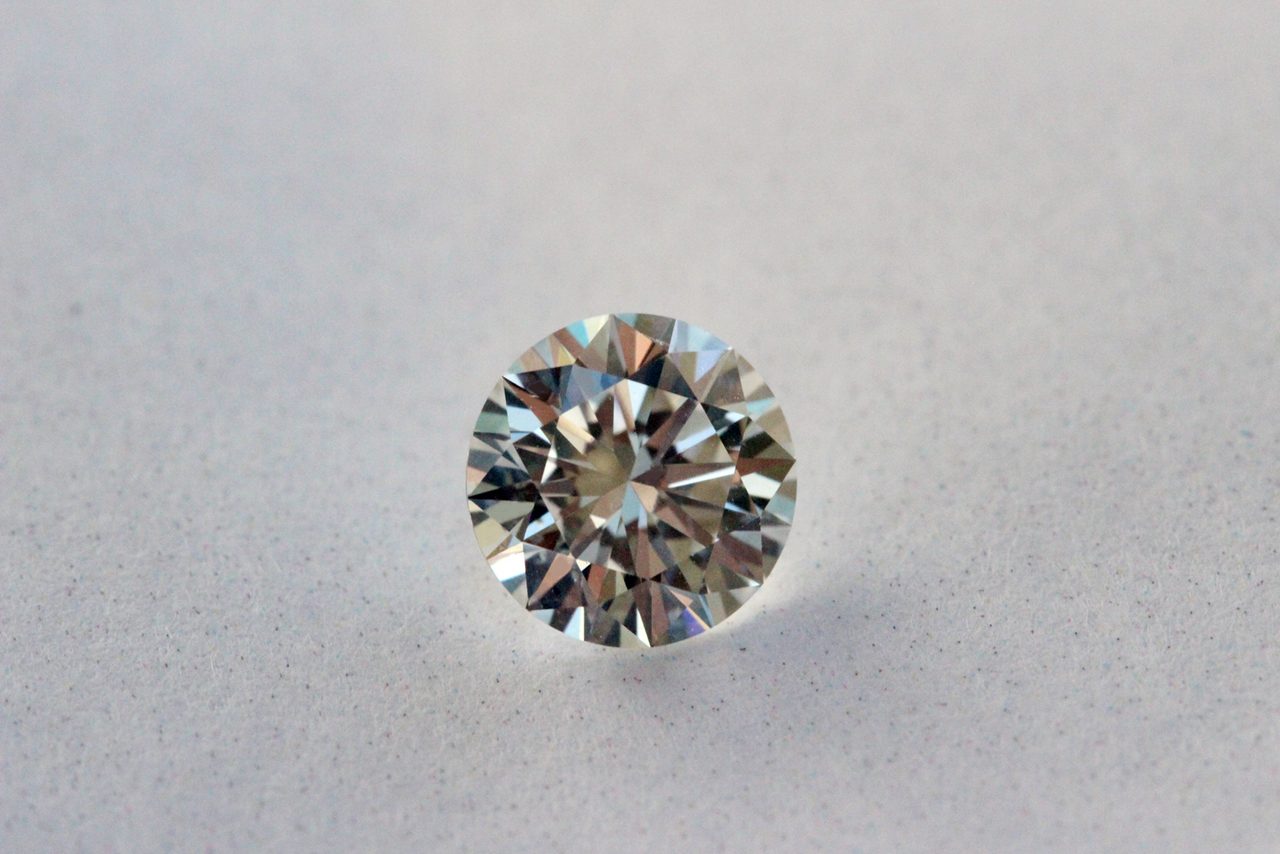
Our current run of old mine cuts sits alongside the rest of the antique and specialty cuts we carry, and everything with a report number is in the inventory with its own video. If you need a pair or a specific millimeter spread, call before you shop the list, because that is a search rather than a click.
Frequently asked questions
What is an old mine cut diamond?
The hand cut brilliant of the 1700s and 1800s: a soft squarish cushion outline, a high crown, a small table, a deep pavilion, and an open culet visible as a dot straight down through the table. It went out of production in the early 1900s once powered bruting and the modern round brilliant took over.
How can I tell an old mine cut from a modern cushion?
The culet. A proper old mine cut has an open culet, which shows on a report as medium, large or very large rather than none or pointed. Add a small table, a high crown and short lower halves. A closed culet on a cushion outline is a modern cushion wearing a costume.
Why does my report say cushion modified brilliant instead of old mine cut?
Because laboratories grade to their own shape vocabulary and old mine cut is not in it. That is normal and it is not a misrepresentation. Judge the stone by the culet, the crown height and the video, and read the shape line as filing rather than description.
Are lab-grown old mine cuts a real old mine cut?
Optically, yes: same facet plan, same open culet, same broad flash under warm light. What you do not get is the hand of a cutter working in 1880 and the small asymmetries that come with it, which for some customers is the entire purchase. What you do get is your choice of weight and quality, and two that match.
How do I order an old mine cut for a restoration?
By millimetre size rather than carat weight, and bring the culet size of the original if you can read it. A modern brilliant will always look wrong beside hundred year old neighbours; an old mine cut at the correct millimetre size will not.
Sources
- Photo: "Vintage diamond engagement ring" by CatherineLewis1976, CC BY-SA 4.0, via Wikimedia Commons, resized
- Photo: "Round Brilliant Cut Diamond" by Petragems, CC BY-SA 4.0, via Wikimedia Commons, resized
- Photo: Old mine cut diamonds, GemConcepts
- Photo: Old mine cut diamond seen face up, Filigree Jewelers
Related reading


Meluhaa Diamonds is a wholesale loose diamond dealer in Los Angeles. Natural and lab-grown are kept as separate lines. Prices show on every stone once you are signed in, and an account is free.
Need something that is not on the list? Call the office at (800) 501-4873 or send a quote request with the shape, the size band and the deadline.