Length to width ratios, the working guide
What ratio bands the trade actually orders in, shape by shape, and why the charts you find online will hand you the wrong stone.
Key takeaways
- A ratio is the length divided by the width off the report. A 9.00 by 6.40 mm oval is a 1.41. No lab assigns it and no lab grades the outline of a fancy shape.
- Order in the band the trade orders in: oval 1.35 to 1.45, emerald 1.40 to 1.50, marquise 1.85 to 2.05, pear 1.50 to 1.65, square cushion and radiant near 1.00.
- Two stones at the same ratio can look nothing alike. The bow tie, the faceting style and the spread are all invisible to the number.
- Give a band, not a number. Two or three hundredths either side is a spec; a single value is a lottery ticket.
- Spec the ratio for the mounting you are building. A halo shortens an elongated stone, a bezel rounds it, an east west setting lengthens it.

Almost every ratio question we get from a jeweler is the same question underneath: will this stone look the way my customer pictured it. Length to width is the fastest number for answering that. It is also the number most often misread. Here is how the trade actually uses it.
What is a length to width ratio?
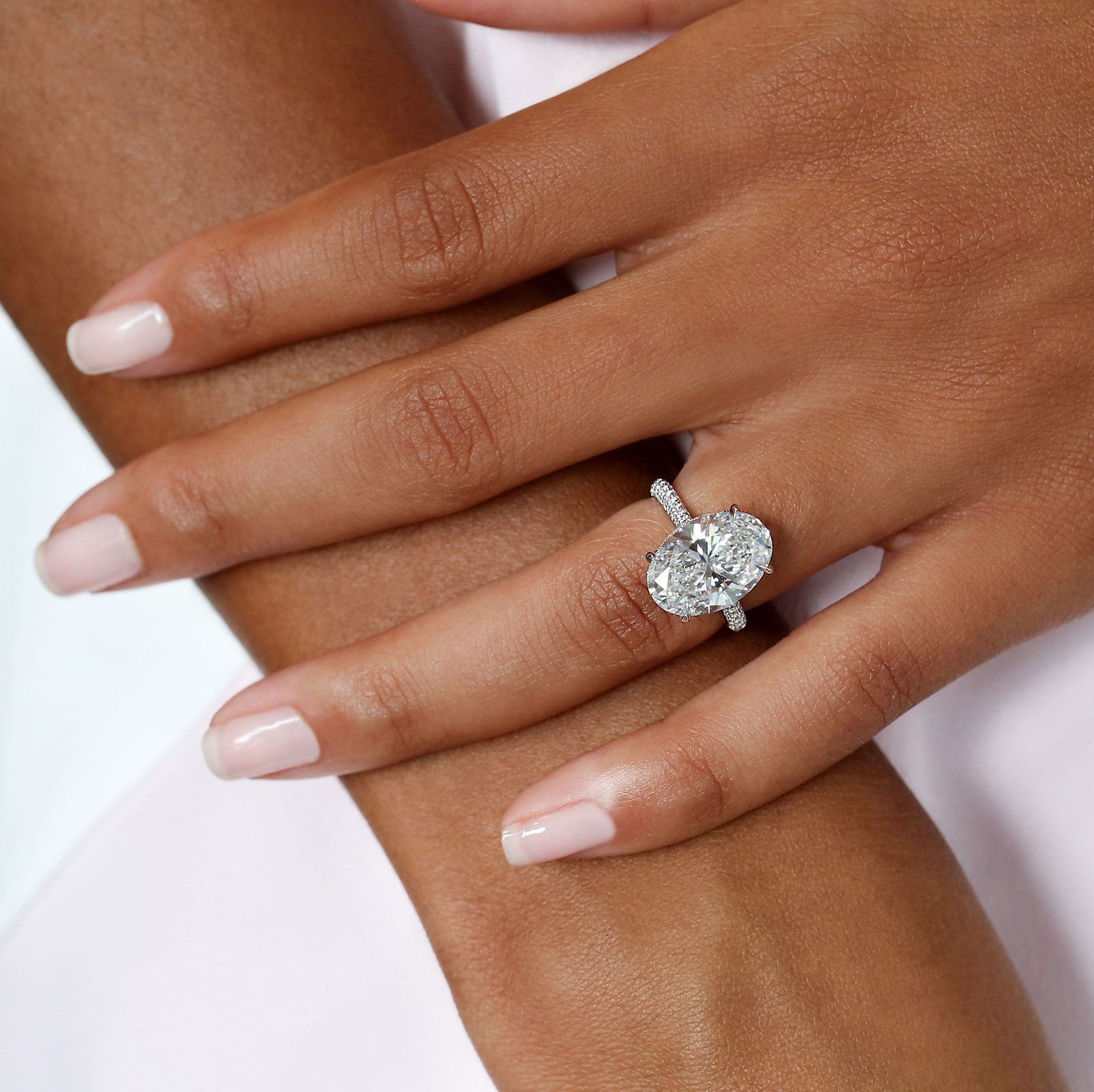
A length to width ratio is the stone's length divided by its width, taken straight off the measurements printed on the report. A 9.00 by 6.40 mm oval is a 1.41. That is the entire calculation.
No lab assigns a ratio and no lab grades the outline of a fancy shape, so the number is descriptive, not a quality grade. It tells you the proportion of the outline and nothing else. Round diamonds sit at about 1.00 by definition and nobody asks about them. Ratio matters for every fancy shape, and it matters most on the elongated ones, where two or three hundredths changes how the stone reads on a hand.
What ratio do jewelers actually ask for, shape by shape?
Most orders land in a narrow band per shape, and those bands have been stable for years. These are the ones we get asked for week in and week out.
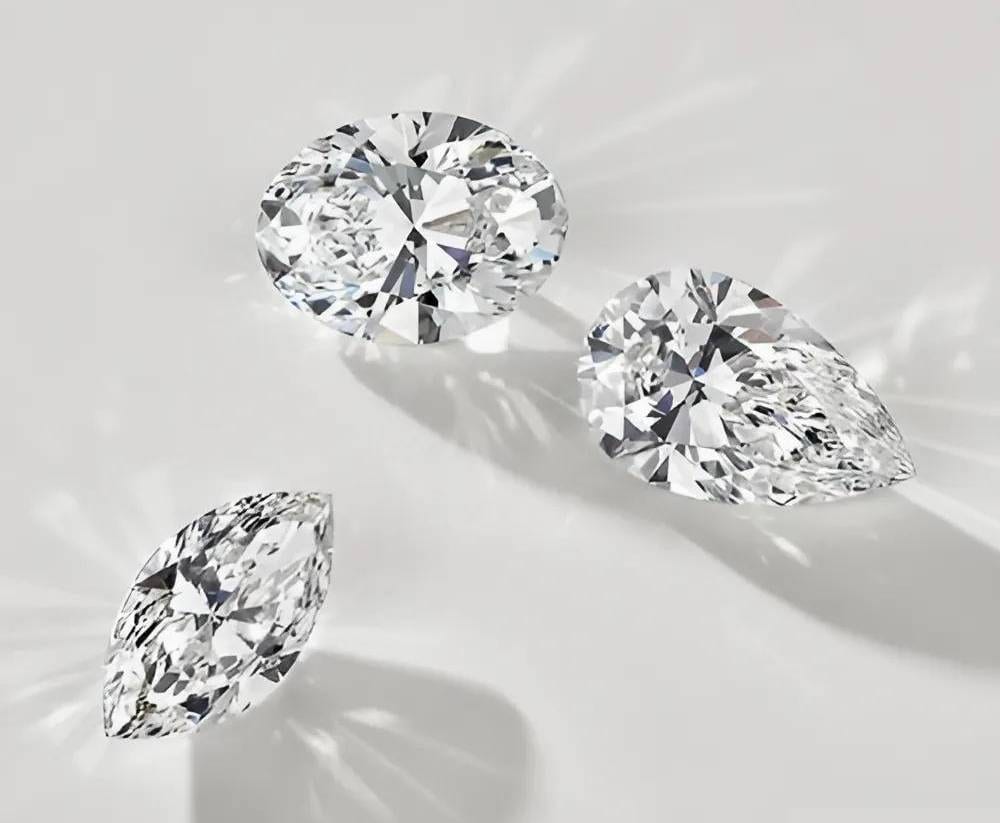
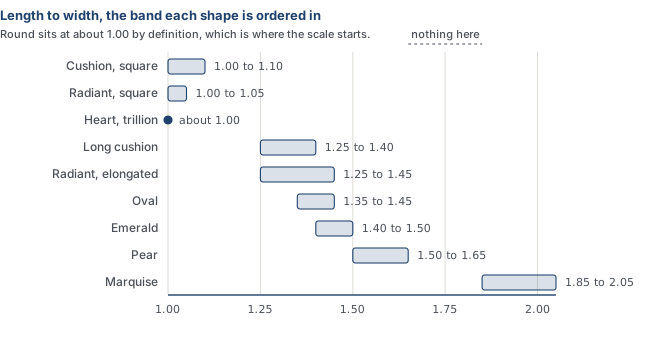
- Oval: 1.35 to 1.45. Below 1.30 an oval starts reading round once it is in a bezel or a halo. Above 1.55 it reads narrow and the bow tie usually gets louder.
- Cushion: square cushions come in at 1.00 to 1.10. Anything past 1.20 is a different animal, which is the whole reason the trade uses a separate name for it.
- Long cushion: 1.25 to 1.40 covers most of the demand. Past 1.50 you are into a look that a customer either wants badly or does not want at all. See long cushion and elongated cushion for how the trade uses those two names.
- Radiant: square radiants at 1.00 to 1.05, elongated radiants at 1.25 to 1.45. The elongated end is where most current bridal demand sits.
- Emerald: 1.40 to 1.50 is the classic. Under 1.30 it starts to look heavy. At 1.00 to 1.05 you are describing an asscher, and you should call it one so the dealer searches the right shelf.
- Marquise: 1.85 to 2.05, with 2.00 as the default ask. Past 2.20 is a specialty look with real buyers but a thin resale market.
- Pear: 1.50 to 1.65 for a classic teardrop, 1.70 and up for the long pear that hangs well in a pendant. Under 1.45 a pear reads stubby in a solitaire and it is hard to sell.
- Heart and trillion: about 1.00. On a heart, anything under 0.95 makes the lobes look squeezed.
| Shape | Ratio band |
|---|---|
| Oval | 1.35 to 1.45 |
| Cushion, square | 1.00 to 1.10 |
| Long cushion | 1.25 to 1.40 |
| Radiant, square | 1.00 to 1.05 |
| Radiant, elongated | 1.25 to 1.45 |
| Emerald cut | 1.40 to 1.50 |
| Marquise | 1.85 to 2.05 |
| Pear | 1.50 to 1.65 classic, 1.70 and up for a long pear |
| Heart, trillion | about 1.00 |
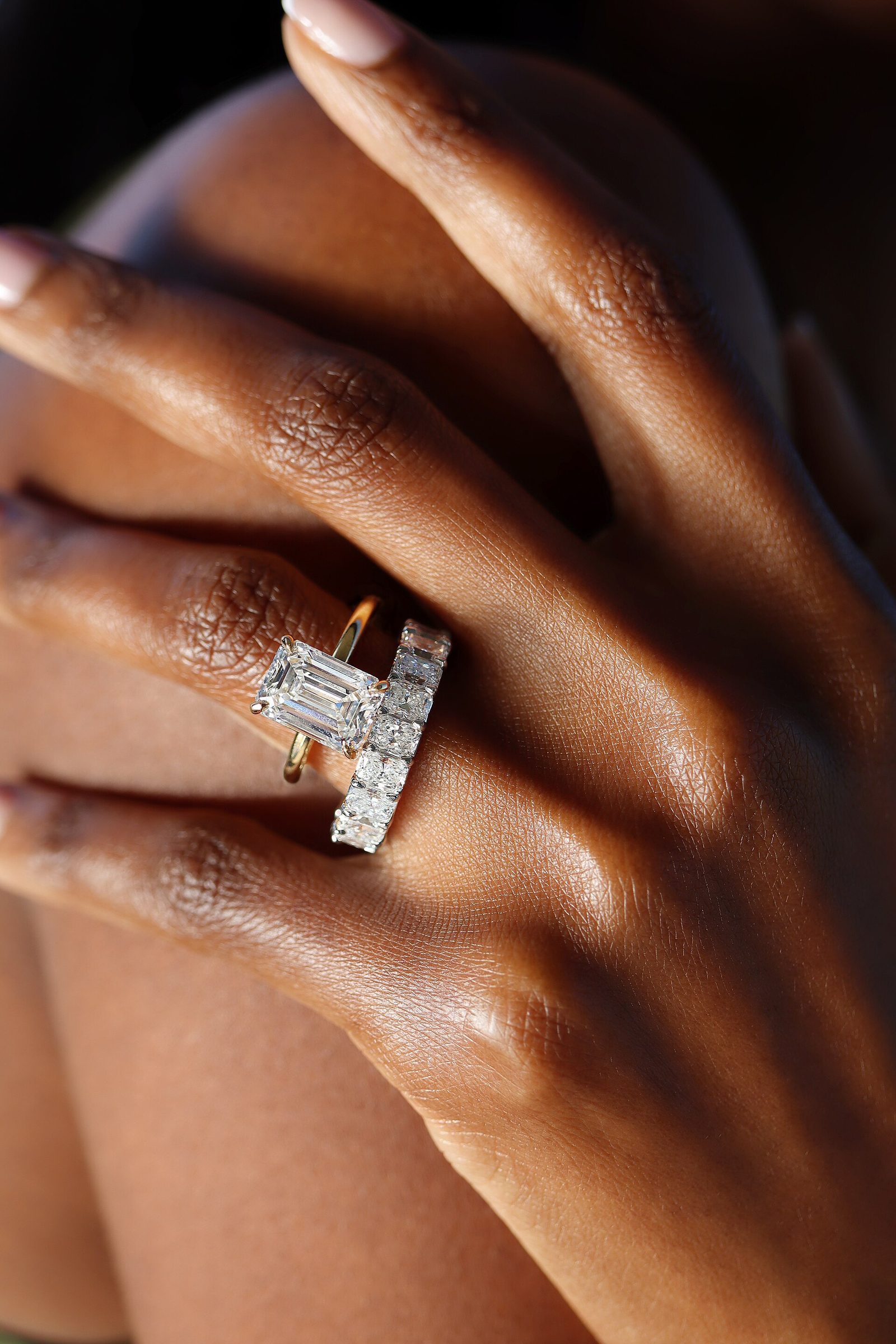
Those are asks, not rules. A customer who has already fallen for a 1.28 oval does not care what the band says. The bands are useful because they tell you where the stock is deep, which is the same thing as telling you where you have choice on color, clarity and price.
Why do ideal ratio charts mislead?
Because a ratio is one number and an outline is a shape. Two ovals that both measure 1.40 can look nothing alike. One has full shoulders and a wide belly. The other is pinched at the shoulders with the weight pushed toward the ends. Same ratio, different stone on the finger.
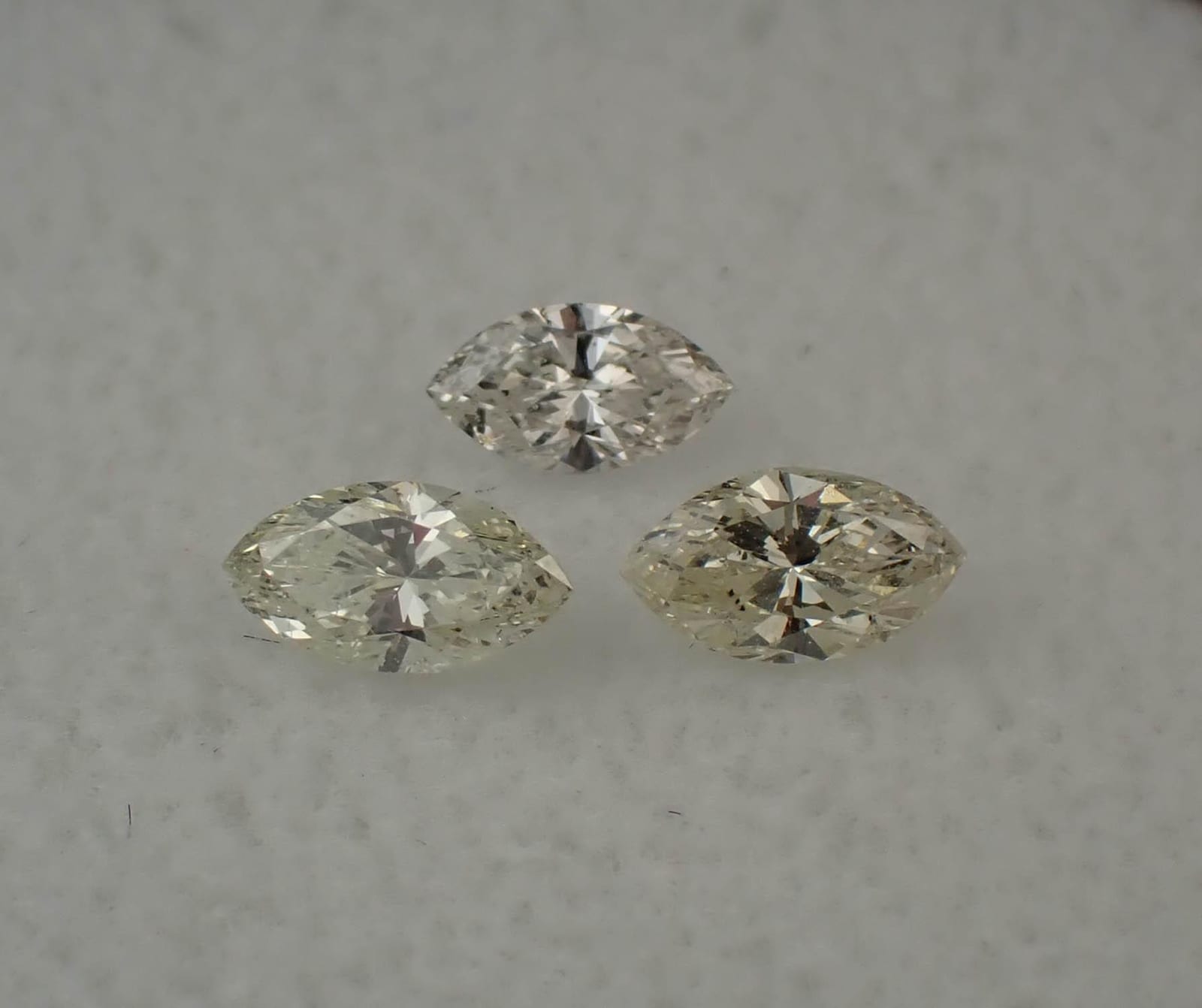
Three more things a chart cannot tell you. First, the bow tie. That dark band across the middle of an oval, pear or marquise is a function of the pavilion, not the outline, so two stones at the same ratio can be clean and dead. Second, the faceting style. A crushed ice cushion and a chunky faceted cushion at the same 1.30 read as different shapes because the light behaves differently. Third, spread. A stone cut deep carries its weight downward, so a deep 1.45 oval can measure smaller face up than a shallow 1.38.
What a ratio chart cannot show you
The bow tie, which is a function of the pavilion, not the outline. The faceting style, since a crushed ice cushion and a chunky faceted cushion at the same ratio read as different shapes. And spread, since a stone cut deep carries its weight downward and can measure smaller face up than a shallower stone at a lower ratio.
There is also plain rounding. Measurements print to a hundredth of a millimeter, and a stone sitting at 1.349 and a stone sitting at 1.351 are the same stone in every way that matters. If your filter cuts at 1.35 you just threw one of them away for nothing.
Last, the setting changes the read. A halo makes an elongated stone look shorter. A bezel makes it look rounder. An east west setting makes a 1.30 look longer than it is. Spec the ratio for the mounting you are actually building, not for a loose stone on a tray.
How do you spec a ratio when you order?
Give a band, not a number. Ask a dealer for exactly 1.42 and you will get one stone or none, and the one you get will be wrong on color or over your budget. Ask for 1.38 to 1.46 and the same dealer can put five stones in front of you.
Give a band, not a number.
Put these six things in the request and you will get a real answer the same day:
- Shape and a ratio band, expressed as a range.
- A weight band rather than an exact weight. Say 1.80 to 2.10, not 2.00.
- A color and clarity floor, not a target. G and up, VS2 and up.
- The outline character in plain words. Full shoulders, lean belly, chunky facets, soft corners. Dealers know exactly what you mean and no number carries it.
- What you will trade away. If ratio is the thing the customer cares about, say so, and say whether you will move on clarity or on budget to get it.
- Video, always. Numbers get you to the short list. Video picks the stone.
A reasonable tolerance is two or three hundredths either side of your target. That is wide enough for a dealer to search real stock and tight enough that nothing you would reject comes back. Tighter than a hundredth is not a spec, it is a lottery ticket.
What should you do with the ratio once the stone is in?
Measure it yourself and compare it to the report. Not because labs get measurements wrong, but because the stone you receive should be the stone on the paper, and measurements are the quickest tie out you have. Check the millimeter spread against what the mounting needs while you are at it. A 2.00 oval that measures short is a fitting problem you want to find on your bench, not at pickup.
If you want to see how these bands look across live stock, the ratio is on every stone in our inventory, and you can filter to a band instead of guessing from a chart.
Frequently asked questions
What is a good length to width ratio for an oval diamond?
Most orders land between 1.35 and 1.45. Below about 1.30 an oval starts reading round once it is in a bezel or a halo. Above 1.55 it reads narrow and the bow tie usually gets louder. None of that is a rule; it is where the stock is deep, which is where you have real choice on colour, clarity and price.
How do I calculate a diamond’s length to width ratio?
Divide the length by the width, both taken from the measurements printed on the report. A 9.00 by 6.40 mm oval is a 1.41. That is the whole calculation, and it is descriptive rather than a quality grade.
Why do two diamonds with the same ratio look different?
Because a ratio is one number and an outline is a shape. Shoulder fullness, belly width, faceting style and pavilion depth all vary at a fixed ratio. The bow tie comes from the pavilion, not the outline, so two stones at 1.40 can be one clean and one dead.
What ratio tolerance should I give a dealer?
Two or three hundredths either side of your target. That is wide enough for him to search real stock and tight enough that nothing you would reject comes back. Ask for exactly 1.42 and you will get one stone or none, and it will be wrong on colour or over budget.
Is an emerald cut at 1.00 just an asscher?
In ordinary trade use, yes, and you should call it one so the dealer searches the right shelf. Emerald cuts are classically 1.40 to 1.50; under about 1.30 they start to look heavy, and at 1.00 to 1.05 you are describing a square step cut.
Sources
- Photo: "Chelsea solitaire engagement ring, oval, 3 rows pave, 18k white gold" by Orcax2023, CC BY-SA 4.0, via Wikimedia Commons, resized
- Photo: "Oui by Jean Dousset Engagement Ring" by Orcax2023, CC BY-SA 4.0, via Wikimedia Commons, resized
- Photo: Loose pear, marquise and oval diamonds, Preya Star
- Photo: Three loose marquise cut diamonds, O'Gallerie
Related reading


Meluhaa Diamonds is a wholesale loose diamond dealer in Los Angeles. Natural and lab-grown are kept as separate lines. Prices show on every stone once you are signed in, and an account is free.
Need something that is not on the list? Call the office at (800) 501-4873 or send a quote request with the shape, the size band and the deadline.