
Wholesale, Natural & Lab-Grown
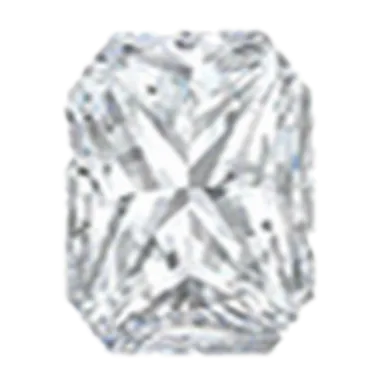
Wholesale Radiant Cut Diamonds
Natural and lab-grown are two separate lines here, never mixed on one certificate or one price list.
Radiant is the cut-cornered rectangle with brilliant faceting underneath. It borrows the outline of an emerald cut and the light behavior of a round, which makes it the shape clients pick when they like the shape of a step cut but not the way a step cut shows every inclusion.
For the trade, radiants earn their place on price and on toughness. The cut corners take a prong without the chipping risk of a sharp square, weight retention from rough is good, and the per carat number lands below a comparable round. That combination is why so much of the large lab-grown production goes into this shape.
Our shelf runs nearly 200 natural radiants and over 1,800 lab-grown. More than 1,000 of the lab radiants are three carats and up, which is the deepest large-stone position we hold in any cut-cornered shape. Natural radiants are thinner by count and concentrate in the one to two carat range.
Buying Radiant Diamonds Wholesale
Radiant faceting varies more between factories than any other shape on the list. Two stones with the same measurements, color, and clarity on paper can look like different products. Some run crushed ice with fine scattered sparkle, some run chunky with broad flashes. Decide which look you are buying before you filter on anything else.
Body color shows more in a radiant than in an emerald cut of the same grade. The brilliant pavilion bounces color back at you instead of letting it sit in the corners. That works against you in a J or K if the client wants icy white, and it works for you when you want a warm face-up look on a budget.
Check the corners on the plot and the girdle description. A radiant with very shallow cut corners behaves like a square and is more fragile in setting. Wide corners eat spread. Look at length and width in millimeters next to the weight before you assume a 2.00 will cover the same finger as the last 2.00 you sold.
Grading follows the same split as the rest of the house: natural radiants are almost all GIA, lab radiants are almost all IGI. Every matched pair on the floor today is lab-grown, which matters if you are building radiant studs or a symmetrical three stone.
Length-to-Width Ratio
Square radiant sits at 1.00 to 1.05 length to width, and that is what a client means by a square radiant even though the report will not use the word.
The classic rectangle runs 1.20 to 1.35. It is the safest buy for general retail and the easiest to set.
At 1.40 and above you are into elongated radiants, which cover more finger and are currently the strongest seller among designers. Above 1.60 the stone starts competing with a long cushion for the same client.
Frequently Asked Questions
What is the difference between a radiant and an emerald cut?
They share an outline and differ underneath. Both are rectangles with cut corners, but a radiant has brilliant faceting that sparkles and disguises inclusions, while an emerald cut has open step facets that show them. A radiant also holds body color more visibly at the same color grade.
What length to width ratio is best for a radiant cut?
1.20 to 1.35 is the safest commercial range for a rectangular radiant. Go to 1.00 to 1.05 for a true square radiant, or push past 1.40 when the client wants an elongated look. Anything in between those bands tends to look indecisive on the hand.
Do you stock large radiant cut diamonds?
Yes, over 1,000 of our lab-grown radiants are three carats and up. That is the largest concentration of big stones in any shape we carry after round and oval. Natural radiants in that size range come and go, so call if you have a specific spec to fill.
How do I get wholesale radiant pricing?
Register a free trade account and log in, and the price appears on every stone. We keep pricing behind the login because it is real wholesale, not a marked up retail number. For multi stone orders or a size run, call the office and we will quote the group.
Related Shapes
Related reading: Length to width ratios, the working guide.