Wholesale, Natural & Lab-Grown
Wholesale Princess Cut Diamonds
Natural and lab-grown are two separate lines here, never mixed on one certificate or one price list.
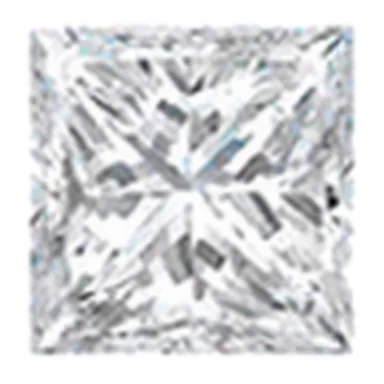
Square outline, sharp corners, brilliant faceting through the pavilion. The princess cut was engineered to get the most weight out of an octahedral rough, which is exactly why it has always been one of the cheapest ways to put a large brilliant on a hand.
The shape lost ground in bridal to ovals and radiants over the last decade, and the trade should read that honestly. What did not go away is the steady replacement business: resizing, restoring, matching a stone to an existing piece, channel and invisible set work, and clients who want the square look without paying asscher money.
We keep nearly 200 natural princess cuts and over 1,400 lab-grown. Over 100 of the lab stones sit right around one carat and 53 natural stones do the same, which makes this one of the better shapes here for filling an exact one carat order from stock rather than from a memo.
Buying Princess Diamonds Wholesale
Girdle thickness at the corners is the number that matters and the one most buyers skip. Those four corners are the thinnest, most exposed part of any princess cut, and a very thin girdle there means a chip during setting. Read the girdle description on the report, favor thin to slightly thick, and tell your setter to use V-prongs or corner protectors.
Chevron count changes the whole look. A princess cut with two chevrons throws large broad flashes, three or four give a finer, busier sparkle that hides inclusions better. Nothing on the report names this directly, so look at the pavilion in a video and learn to count them. Clients notice the difference even when they cannot explain it.
Depth runs high in this shape. A princess cut carries a lot of its weight below the girdle, so it faces up smaller than a round of equal carat. Compare the millimeter measurements rather than the weight when a client is choosing between shapes, and expect to explain why a 1.00 princess looks smaller than the 1.00 round next to it.
Grading is GIA on almost every natural stone and IGI on almost every lab stone. For channel or invisible setting, ask about parcels rather than singles. We can pull a run in one size band by hand, and every matched pair on the floor today is lab-grown.
Length-to-Width Ratio
1.00 to 1.05 length to width is a true square princess, and that is what a client means when they say square.
Above 1.10 the stone visibly reads rectangular, which is fine as a deliberate choice but wrong when someone asked for square and did not check the numbers.
Frequently Asked Questions
Are princess cut diamonds prone to chipping?
The four corners are the weak point, and a thin girdle there is the actual cause. Buy stones with at least a thin to medium girdle at the corners and have them set with V-prongs that cover each corner. Set properly, a princess cut wears as well as any other shape.
Why does a princess cut look smaller than a round of the same weight?
It carries more of its weight below the girdle. The princess cut was designed for maximum yield from octahedral rough, which means a deeper pavilion and a smaller face-up spread. Compare millimeter measurements instead of carat weight when a client is deciding between the two shapes.
Do you have one carat princess cut diamonds in stock?
Yes, over 100 lab-grown and 53 natural princess cuts currently sit right around one carat. That is one of the tightest one carat clusters we hold in any shape, so an exact one carat order can usually be filled from stock the same day.
How do I open a wholesale account to see princess cut prices?
Registration is free and takes a few minutes on the site. Once you are approved and signed in, prices appear on every stone in the catalog. For channel set runs or several stones in one size, call and we will build the parcel and quote it as a group.
Related Shapes
Related reading: our diamond buying and grading guides.